
ERP projects are usually described as software implementations.
In reality, they are operational restructures.
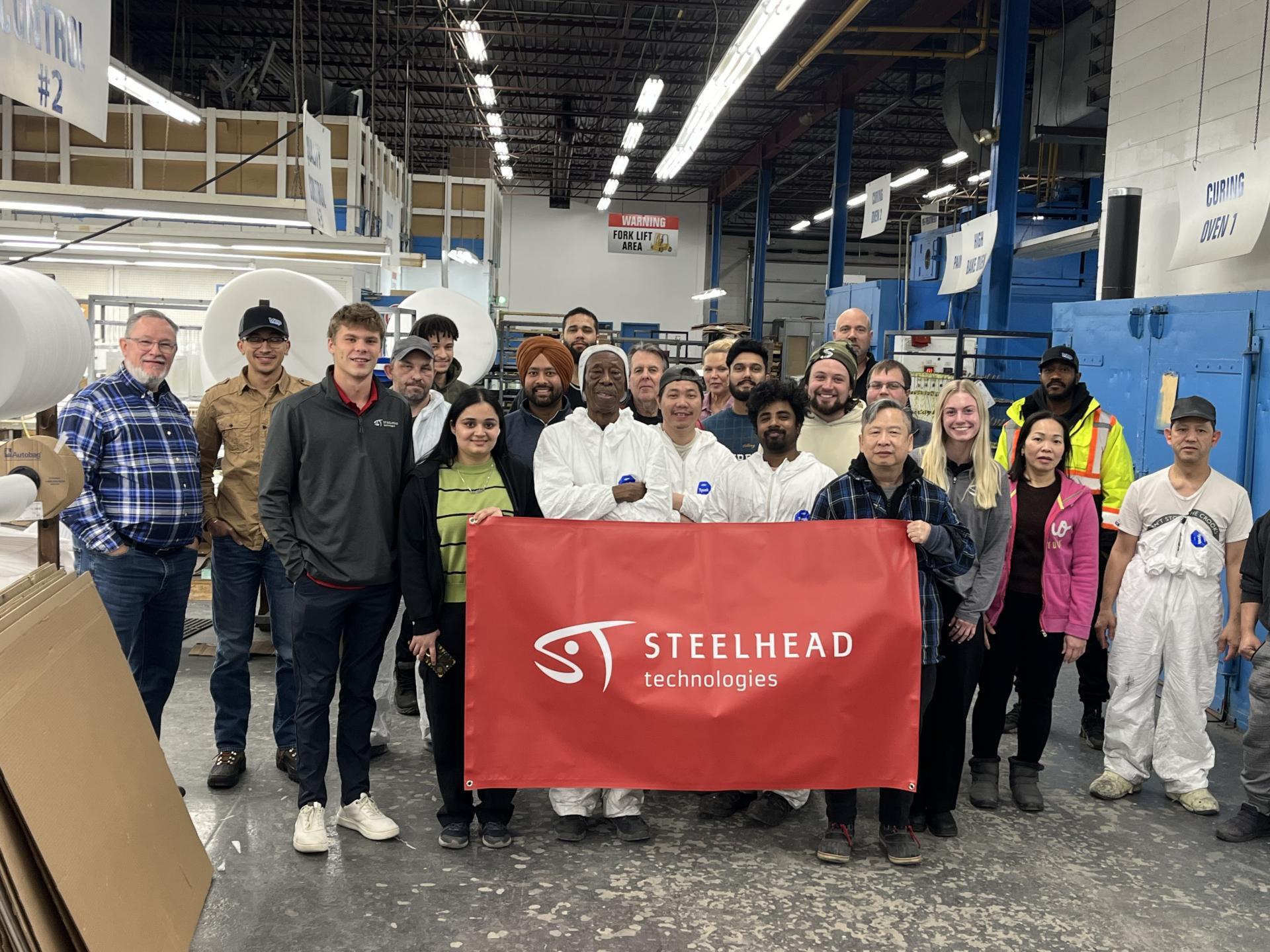
Over the past 7 months, I led the implementation of Steelhead ERP across a precision industrial finishing operation serving aerospace, defence, and advanced manufacturing sectors. The objective was not simply to deploy software. The objective was to rebuild operational infrastructure.
Manufacturing organizations often underestimate this distinction. ERP is rarely a technology problem. It is an operational design problem.
When ERP fails, it usually fails for predictable reasons.
Processes are unclear. Production data is inconsistent. Shop floor workflows rely on tribal knowledge. Information is fragmented across spreadsheets, whiteboards, and paper travelers.
Installing software into that environment does not solve the problem.
It exposes it.
ERP Implementation Is Organizational Surgery
Most ERP projects are framed incorrectly from the beginning. Leadership teams treat ERP as a software installation rather than a redesign of how the business actually runs.
That mistake creates the failure pattern seen across manufacturing.
Companies install ERP expecting operational clarity. Instead they encounter:
- Low operator adoption
- Parallel systems (spreadsheets, whiteboards, paper travelers)
- Incomplete production data
- Delayed reporting
- Managers relying on manual oversight to understand shop performance
ERP becomes a reporting layer rather than an operational system.
If ERP does not control the workflow, it does not control the operation.
Steelhead ERP and the Future of Manufacturing Operations
For decades, manufacturing ERP systems have promised operational control, visibility, and efficiency. In reality, most implementations deliver the opposite: complexity, poor adoption, and fragmented workflows. The root problem is not technology — it is philosophy.
Most ERP platforms were designed as accounting systems first and manufacturing systems second.
Steelhead ERP represents a fundamentally different approach. Instead of retrofitting production onto financial software, Steelhead treats manufacturing operations as the core system of the business.
The difference is not incremental. It is architectural.
ERP Is Not Software. It Is Operational Infrastructure.
The failure pattern in manufacturing ERP implementations is well known.
Companies install software expecting it to fix operational chaos. Instead, they discover the opposite: ERP exposes the chaos already present in the organization.
Spreadsheets still run scheduling. Paper travelers still control production. Operators still rely on tribal knowledge. Managers still walk the floor to understand what is actually happening.
The result is predictable. ERP becomes a reporting tool rather than an operational system.
Steelhead addresses this failure directly by redefining what ERP should do. The platform functions less like traditional ERP and more like a manufacturing operating system — a digital backbone connecting every part of the production environment.
Manufacturing Starts on the Shop Floor
Most ERP systems are designed around accounting events:
- purchase orders
- invoices
- financial reporting
Manufacturing happens somewhere in the middle.
Steelhead reverses the architecture.
Production becomes the central event in the system. Every operational function — quoting, scheduling, quality, inventory, invoicing — connects directly to what is happening on the shop floor.
Operators receive digital instructions, documentation, and workflow guidance through Steelhead’s digital workboards, replacing paper travelers and manual instruction systems.
The effect is simple but significant.
The production floor becomes digitally visible.
For many manufacturers, this is the first time operations are fully observable in real time.
Real-Time Visibility Is the New Competitive Advantage
Manufacturing leadership has historically operated with delayed information:
- yesterday’s production reports
- weekly throughput summaries
- manual updates from supervisors
By the time problems appear in reports, they are already embedded in the system.
Steelhead removes that delay.
Live dashboards provide immediate visibility into:
- job progress
- work center status
- production bottlenecks
- throughput performance
- quality events
This changes how leadership manages the operation.
Instead of reacting to yesterday’s problems, leaders manage constraints in real time.
Operational awareness becomes continuous rather than periodic.
ERP Adoption Requires Operational Discipline
The most important lesson from our implementation was straightforward.
Technology does not fix operational chaos.
Operational structure fixes operational chaos.
Steelhead’s implementation philosophy reflects this reality. The system works best when organizations commit to:
- structured workflows
- standardized production steps
- disciplined data capture
- clear operational accountability
When those conditions exist, ERP becomes extremely powerful.
Without them, ERP simply mirrors existing dysfunction.
Steelhead does not attempt to hide this reality. It forces operational clarity by making workflows visible and measurable.
The Rise of the Manufacturing Operating System
The next generation of manufacturing software will not resemble traditional ERP systems.
It will function as integrated operational infrastructure — connecting machines, operators, workflows, and production data into a single environment.
Steelhead represents an early example of this transition.
By combining production management, quality systems, inventory control, documentation, and reporting into one platform, the system begins to function as the digital backbone of the factory.
For manufacturers seeking real operational control, this is where the industry is moving.
Final Assessment
Steelhead ERP stands out because it recognizes a basic truth many ERP vendors ignore:
Manufacturing does not run on accounting systems. It runs on operational systems.
By placing production visibility, workflow discipline, and real-time operational data at the center of its architecture, Steelhead provides something traditional ERP platforms rarely deliver — genuine operational awareness.
For manufacturers serious about digitizing their operations and building scalable production systems, Steelhead is one of the most compelling platforms currently available.
Rating: Exceptional.
This article was originally posted on LinkedIn, view here: https://www.linkedin.com/pulse/steelhead-erp-coos-perspective-rebuilding-operations-nicholas-farndon-cgnse/?trackingId=5UWz3mTX3gaZ96xlTzqIuw%3D%3D